
About Course
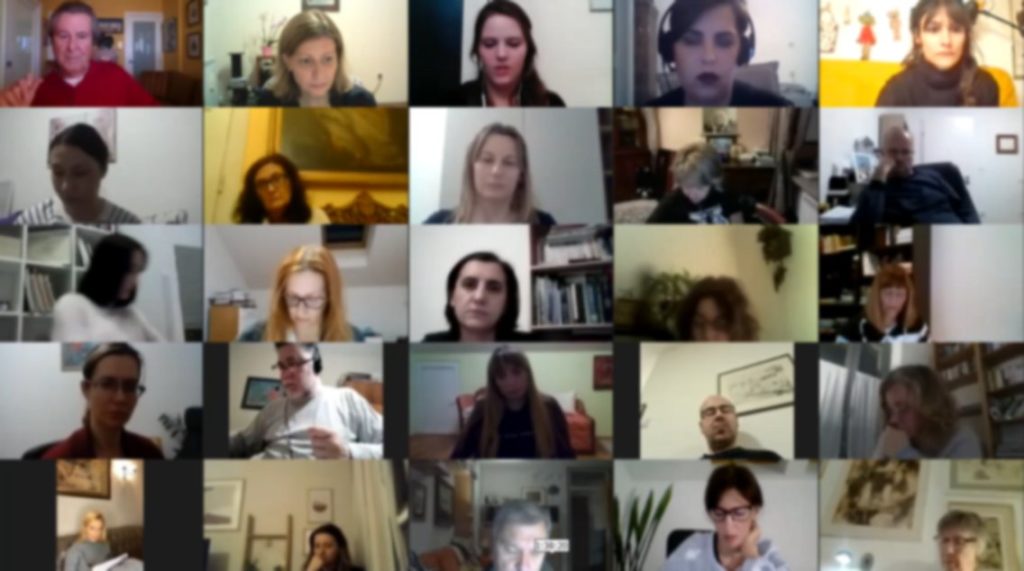
Dr Ričard G. Erskin held a three-session online video seminar on March 19, 20 and 21, 2021, organized by the National Association for Transactional Analysis – NATAS, on the topic: “Working with Child Ego States: Applying Research and Theories of Child Development in Psychotherapy with Adult Clients”..
Due to the great interest of members of the psychotherapy community who participated in the video seminar held by Dr. Richard Erskine in December 2020, and because of the exceptionally positive evaluation results of that seminar, although he is very busy, Dr. Erskine found the time to prepare a lecture on a topic that showed the greatest interest among participants.
Psychotherapists and trainees from various psychotherapy modalities were invited to attend the seminar, especially trainees in transactional analysis, integrative psychotherapy, gestalt therapy and psychoanalysis.
Dr. Erskine is a recognized expert who explains theoretical and practical concepts in an exceptionally skillful way and leads his workshops very successfully. His workshops are widely attended around the world, and during the COVID-19 pandemic he did not stop; throughout 2020 he held online video seminars for psychotherapy communities around the world.
In this seminar, various concepts of transactional analysis and integrative psychotherapy based on the development of relationally focused – integrative psychotherapy were presented..
For the treatment of childhood neglect and trauma, a psychotherapist is needed who adapts to each client’s emotional and cognitive developmental levels. In order to achieve this form of treatment, psychotherapists and counselors must be able to apply the concepts of children’s developmental psychology and research findings in their therapeutic practice, so they can identify and work effectively with challenges such as:
· Memories from early childhood that are embodied in physiological sensations, rooted in affect, or unconsciously enacted in adult relationships. Such memories are not accessible to consciousness because they are prelinguistic, presymbolic, procedural and implicit. However, these neurological imprints create unconscious patterns of Child Ego States that affect our clients in their adult lives.
· Physiological, emotional and behavioral signs of disturbances in the relationship between newborns and parents are evident from the first few months of a child’s life and throughout adolescence. Subtle versions of these same self-stabilizing dynamics can be observed in adult clients when they are in different Child Ego States: body stiffening, agitation, avoidance of eye contact, and distancing from their feelings. Such behavior may signal unresolved disruptions or disturbances in early childhood relationships that continue to create difficulties and conflicts later in adulthood.
· Creating methods adapted to the specific rhythm of a newborn, child or school-age child, their affective and cognitive level of functioning, and their unique relational needs at the developmental level, where the adult client may be fixated. It is necessary to be therapeutically responsible toward the withdrawn and quiet client, the hypoactive or hyperactive client, as well as the client who shows resistance or is combative.
Each of these behavioral manifestations may reflect neglect and trauma that leave a person “stuck” at an earlier developmental level.
This nine-hour seminar, consisting of three sessions of three hours each, focused on different psychotherapy methods designed under the influence of child development theories and research.
Dr. Erskine presented various hypotheses and concepts of child development based on the work of the following theorists: John Bowlby, Erik Erikson, Selma Fraiberg, Jean Piaget and Donald Winnicott, as well as many contemporary researchers of child development.
Specifically, the seminar covered:
· Creating developmental images and hypotheses;
· Assessment and response to unconscious attachment patterns;
• „Translating” bodily sensations and affects into language;
· Facilitating the formation of vocabulary and concepts;
· Constructing life narratives through conclusion-making;
· Using phenomenological and historical inquiry; and
· Facilitating emotionally safe therapeutic regression to earlier developmental periods.
If you did not attend the workshop and would like to watch the recording of all three days of the workshopor recordings of any previous workshops organized or co-organized by NATAS, you can order the recording. Our recommendation is that, whenever possible, you attend the workshop live, as this gives you the opportunity for direct contact with the lecturer.
This online video seminar, held via Zoom, took place in English and Serbian with consecutive interpretation. You can find a description of consecutive interpretation here: What is consecutive interpreting?).
Dr. Erskine insists on consecutive interpretation because it is the best way to attune live with interpreters and participants — to follow whether attendees understand the seminar content well, to observe participants and their reactions, and potentially include them in the discussion.
Only participants who attended the seminar received a certificate for nine hours of education.
The author’s handouts and PowerPoint presentation are not included in the seminar price, nor is the video recording of the seminar.
To prepare for participation in this video seminar, the lecturer recommended reading the following literature:
1) Barbara D. Clark (1991) Empathic Transactions in the Deconfusion of Child Ego States, Transactional Analysis Journal, 21:2, 92-98, DOI: 10.1177/036215379102100204
2) Erskine, R.G. (2008). Psychotherapy of Unconscious Experience. Transactional Analysis Journal, 38: No. 2, 128-138. DOI:10.1177/036215370803800206
3) Erskine, R.G. (2009). Life Scripts and Attachment Patterns: Theoretical Integration and Therapeutic Involvement. Transactional Analysis Journal, 39; No. 3, 207-218. DOI:10.1177/036215370903900304
And, if possible:
4) Erskine, R. G. (2015). Relational Patterns, Therapeutic Presence: Concepts and Practice of Integrative Psychotherapy. London: Karnac Books.
For more information, contact:
Zvonko (Zvonimir Ninić); E-mail: natasrbije@gmail.com
Telefon: +381641376144
Dr. Richard Erskine is a clinical psychologist, trainer and director of the Institute for Integrative PsychotherapyDr. Erskine was originally trained in child-centered psychotherapy, and later also studied gestalt therapy with Fritz and Laura Perls. He is a certified clinical transactional analyst and a licensed psychoanalyst specializing in psychoanalytic self psychology and object relations theory. His work represents the integration of all these concepts and fifty years of clinical experience, including work with disturbed children, prisoners from maximum-security prisons, clients with borderline and narcissistic personality disorders, post-traumatic stress and dissociative identity disorders. In recent years, his research and clinical practice have focused on the treatment of the schizoid process and obsessive disorders. He is the author of several books and numerous articles on psychotherapy theories and methods. His best-selling book, co-authored with Janet Moursund and Rebecca Trautmann, is „Beyond Empathy: A Therapy of Contact-in-Relationship (1999, Brunner/Mazel).
Course Content
Working with Child Ego States
-
Prvo poglavlje
00:00 -
Drugo poglavlje
00:00 -
Treće poglavlje
00:00